Training for MBI Members and Beyond

Heather Packard is the professional and workforce development director for the Modular Building Institute.
By the Numbers, which appeared in the January/February 2024 issue of Modular Advantage, highlighted member needs articulated as part of an intelligence gathering process I initiated in the fall of 2023. This feedback included requests for MBI to create and offer professional development opportunities for member companies and staff, particularly to support new staff on-boarding and training efforts.
Members also expressed a desire for MBI to engage in outreach to academic universities, with a goal towards increasing the supply of better-trained and more well-rounded future designers, architects, engineers, estimators, project managers, and more for our industry.
In response to member feedback, I’m pleased to announce that, in early December, we launched the MBI Learning Center – a destination where stakeholders can experience personal and professional growth and acquire expertise necessary to succeed in our industry – and our first self-paced, online course, Introduction to Commercial Modular Construction.
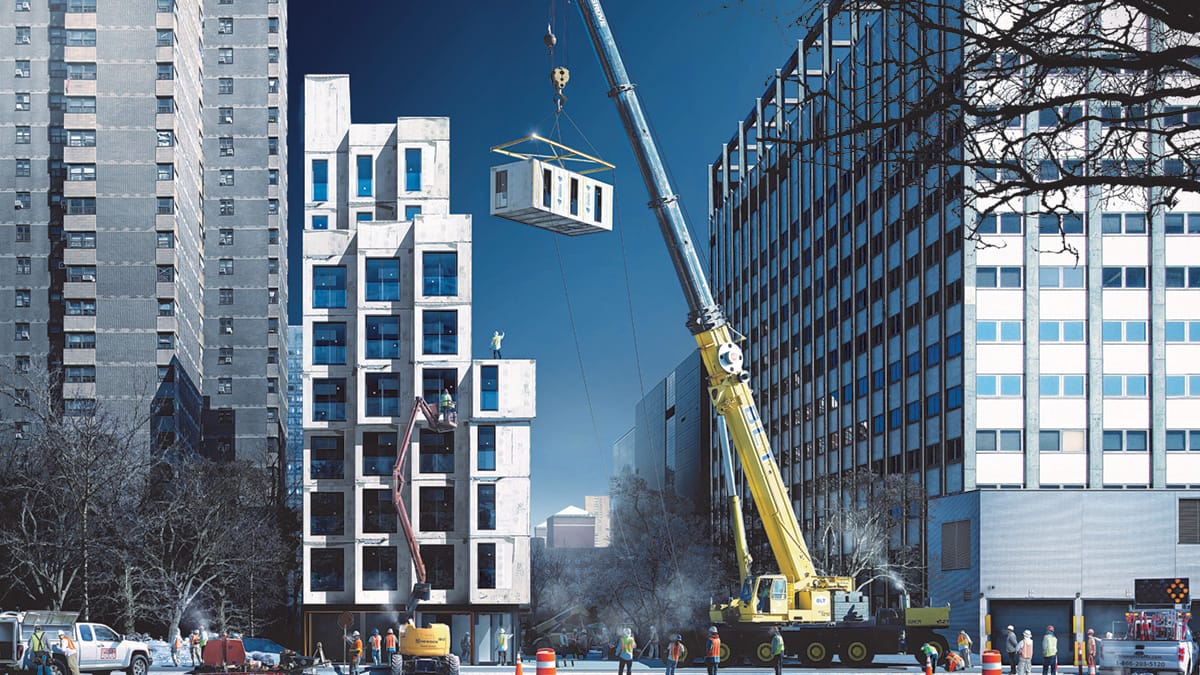
This first online course introduces learners to an innovative, exciting, and sustainable modern method of construction. It’s designed to help learners gain a comprehensive introduction to the commercial modular construction industry and understand the basics of modular design, manufacturing, and construction. The course offers in-depth explanations of the process, key roles and responsibilities of stakeholders, and the concepts and terminology used in modular building.
Developed with adult learners in mind, the course offers a focused, flexible learning opportunity to upskill efficiently. It is comprised of six modules, broken down into multiple lessons with interactive elements and knowledge checks, and a final learning assessment in multiple choice format.
Successfully completing the Introduction to Commercial Modular Construction online course awards a learner with a certificate of completion and can help demonstrate that they have gained a foundational understanding of the modular construction process, including roles and responsibilities and commonly used terminology. For those already working within or new to the industry, it can help increase understanding on how and where their role fits within the process and provided a shared vocabulary. For students aspiring to work in the industry, it can offer the same while also increasing potential employability.
MBI’s Introduction to Commercial Modular Construction course is open to anyone interested in the modular construction industry. From industry aspirants and newcomers to experienced professionals, this course is an excellent way to become fully versed in the fundamentals of commercial modular construction.
Please visit the MBI Learning Center to view more details about the new course and other available learning assets, including articles, research, and podcasts.
Do You Work for an MBI Member Company?
MBI member companies and staff are eligible to access Introduction to Commercial Modular Construction as a benefit of MBI corporate membership. If you have not yet received your coupon code to discount the pricing, please contact us.
Are You a University Professor or Student Interested in Modular Construction Curriculum?
Please contact Heather Packard (heather@modular.org) to learn more about university access and available resources.
More from Modular Advantage
Mind the Gap: The Interface Between Onsite and Offsite Construction
Every design for manufacture and assembly (DfMA) project — modular, mass timber, or panelized — is really two projects joined at a seam. One is built in a controlled factory to millimeter tolerances; the other in the field, in weather, to the looser tolerances of poured concrete and human hands. Between them sits an interface: where the factory’s precision meets the site’s reality.
Rules, Rails & Repeatability: Applying DfMA to Modular Healthcare
DfMA offers several advantages for healthcare projects, with faster delivery among the most valuable. Schedule matters when building new facilities, expanding campuses, renovating existing space or bringing care closer to communities that need it.
Precision and Possibility: Demands of DfMA and What Modular Mass Timber Makes Possible
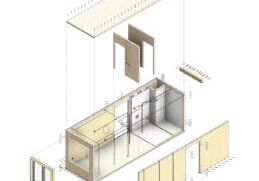
Mass timber does not automatically create an efficient modular building. Its precision makes early coordination more important: fabricated components will accurately reproduce both the team’s solutions and its mistakes. The material’s advantages are realized only when supported by an equally precise design and delivery process.
Catch It in the Factory, Not in the Field: Smarter Testing for Modular Builds
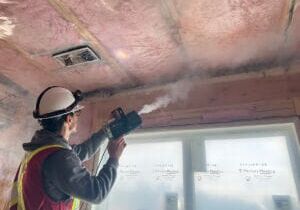
Integrating watertightness and airtightness testing into factory workflows transforms quality assurance from a reactive process into a proactive commissioning strategy. It ensures that every module shipped is field ready and resilient for transportation while also supporting the ability of the modular construction industry to make buildings better.
Modular Construction Contracts: Key Considerations for Successful Canadian Projects
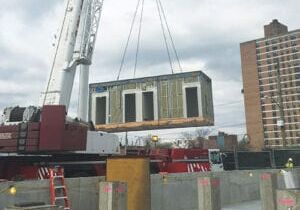
Starting a modular project with a well-developed contract protects both the owner and the contractor. It will help keep the project on track and on budget, and it will improve quality from the factory floor to final installation on-site.
Modular by Design: Turning Architecture into a Manufacturing System
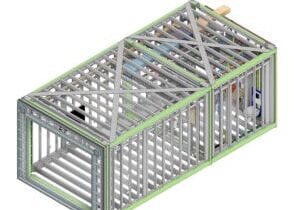
Modular construction is often presented as a faster way to build. Speed, however, is only one part of its value. The larger opportunity is to create a coordinated design and production system that improves quality, reduces uncertainty, and allows a building to move efficiently from concept design through manufacturing, transportation, installation, and completion.
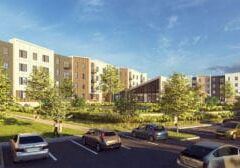
Repeatability Begins with Trust: What Alora at Dry Creek Reveals About Scaling Modular Housing
Alora at Dry Creek, a 329-unit, multifamily community comprising five four-story buildings in Centennial, Colorado, demonstrates how repeatable design, standardized manufacturing and early collaboration can work together to create a model that is not only faster to deliver, but easier to replicate across future projects.

T.R. Arnold: The Art of Third-Party Inspections
T.R. Arnold (TRA), a third-party inspection company in Elkhart, Indiana, contracts with modular manufacturers across the US. Manufacturers register with each state to which they intend to send their modules and may be required to hire a third-party inspection company.

Creating an ‘Ecosystem for Innovation:’ 50+ Years of Modular Construction Oversight in Virginia
Virginia’s modular building program began in 1973, with the implementation of the Virginia Industrialized Building Unit and Mobile Home Safety Regulations. Now it’s leading the country in modular code adoption.
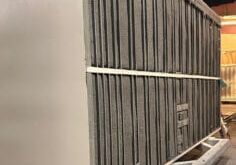
Understanding Thermal Barriers Compliance Methods & Emerging NFPA-275 Foam Plastic Technologies
New fire barrier technologies are improving total costs and margins in major areas of construction, such as commercial, government, union and prevailing wage projects. These benefits translate into other large fringe areas, such as agriculture, commercial cold storage facilities, grow houses, outbuildings, military and aviation hangars.