
Building Hope: ROC Modular’s Role in the Steveston Highway Affordable Supportive Housing Project


Steveston Highway Affordable Supportive Housing Project
Location: Richmond, BC, Canada
A Critical Need, A Faster Solution
In Richmond, BC, the demand for affordable housing has been needed for a long time. This is especially true for women and children in vulnerable situations. When Turning Point Housing Society and BC Housing set out to build a 25-unit supportive housing development on Steveston Highway, time was of the essence.
Funded through the Rapid Housing initiative, the goal was clear: Deliver safe, accessible, and permanent housing as quickly as possible.
At ROC Modular, we knew this was the kind of project where modular construction could make a real difference. By fabricating the building in modules offsite and assembling them on location, we could cut down construction time significantly while maintaining the high standards required by BC Housing and CMHC Universal Design Guidelines.
Meeting the Challenges Head-On
Building modular means the majority of construction is completed off-site at the modular manufacturing facility. Each module is built
separately, transported to the site, and then stacked and connected. But this project came with a unique challenge. It had to meet Richmond’s floodplain requirements. That meant the ground-floor units needed a special steel-floor plate system, including a galvanized C-channel rim beam with cold-formed steel joints. Above that, we used traditional wood framing to maintain efficiency without compromising structural integrity.
Beyond the technical challenges, we also had to ensure the new building fit seamlessly into the surrounding residential neighborhood. Working closely with the architect from Boni-Maddison, we tackled zoning, parking variances, and service connections. To soften the building’s visual impact, we carefully designed the facade with varied colors and materials, helping it blend into the community rather than stand apart from it.

Precision Planning, On-Time Execution
One of the biggest advantages of modular construction is predictability. Unlike traditional construction, which is often delayed by weather, labor shortages, or supply chain issues, modular builds follow a precise schedule. From the moment we came on board, our team, along with our partners TASU Construction and Buttcon, worked through every design and constructability challenge in advance.
The result? We stuck to our timeline down to the week. Six months after onboarding, we were exactly where we said we’d be, delivering and installing 33 modular units right on schedule.
“Seeing the mods being lifted in brings a smile to my face that we’re bringing this housing to Richmond and it’s going to make a big difference in the community.”
— Dominic Levesque, Buttcon West
More Than a Building, A Fresh Start
For ROC Modular, this project wasn’t just about assembling a structure; it was about providing stability for those who need it most. Housing insecurity is one of the biggest challenges facing British Columbia, and delivering homes faster than traditional methods really helped.
Standing on-site, watching the last module lock into place, we weren’t just seeing a completed building, we were seeing the beginning of something bigger. A safe place for women and children to rebuild their lives. A model for how modular construction can help solve the housing crisis.
This is proof that when the right teams come together, real change happens.
More from Modular Advantage
From Amsterdam to Brussels: How MBI Is Strengthening Europe’s Modular Construction Voice
By the end of 2026 MBI’s Government Affairs team will have traveled over 6,000 air miles to bring Town Hall events to five different cities in two countries.
From Model to Machine: Why Modular Scale Is Becoming a Software Problem, not a Material One
For modular manufacturers that have already secured demand and repeatable volume, the next major constraint may no longer be forming capacity itself. Increasingly, it is the continuity of the information feeding that capacity.
Who Will Define Modular Products for AI?
Artificial intelligence is making building configurators easier and less expensive to create. This makes urgent manufacturers’ need portable product definitions, stable identities, and shared interfaces regardless of how others’ software is produced.
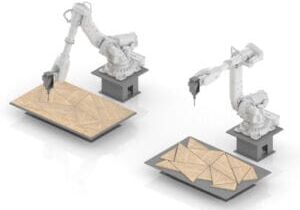
From BIM to Robotic Production: A Digital Workflow for Customized Components in Volumetric Modular Construction
For volumetric modular manufacturers, the value of this workflow is not simply the use of robotics. Its real value is continuity.
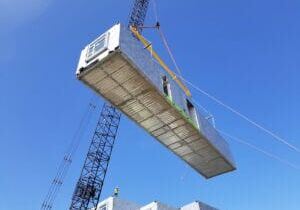
Helping Build a Common Framework for Modular Construction in Canada
Canada’s modular construction sector continues to gain momentum, but scaling it successfully will depend on shared expectations across design, manufacturing, approvals, and project delivery. CSA Z251 helps provide that common foundation.
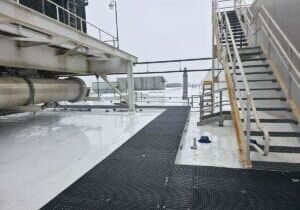
Edges, Exits & Equipment: A Modular Builder’s Guide to Rooftop Access
Rooftop access belongs in the factory design. Before the modules ship, the project team should identify each route’s users, confirm applicable requirements, coordinate with the roof system and structure, and assign responsibility.
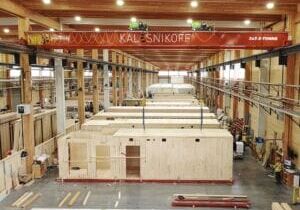
When Timber Production and Modular Construction Share One System
As demand for multifamily and workforce housing continues to outpace what conventional construction timelines can deliver, models that reduce the number of handoffs between structural fabrication and modular assembly are likely to draw more attention.
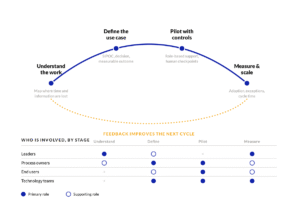
Your AI Strategy Is an Enablement Strategy
Tools will change. Teaching employees only the steps in one platform creates a narrow capability. Involving them in problem definition, process mapping, data assessment, controls, and measurement gives the organization a way to improve its systems as technology evolves.
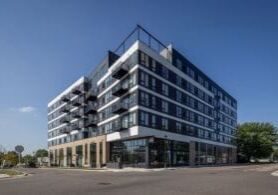
By-Right Permitting: The Missing Lever for Scaling Modular Multifamily
Modular has already proven it can outperform traditional building methods on speed and cost per unit. The next frontier is outside the factory in the front end of the process, where projects either clear a path to construction or get stuck in review.
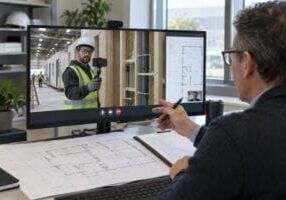
Remote Inspections and The Future of Factory Oversight
Remote inspection is becoming a practical part of modular construction oversight. Its value is greatest when it is used selectively, governed by clear procedures, and supported by complete traceability.