Inside the Construction of 355 Sango Court
The 2024 Best of Show for Permanent Modular Construction
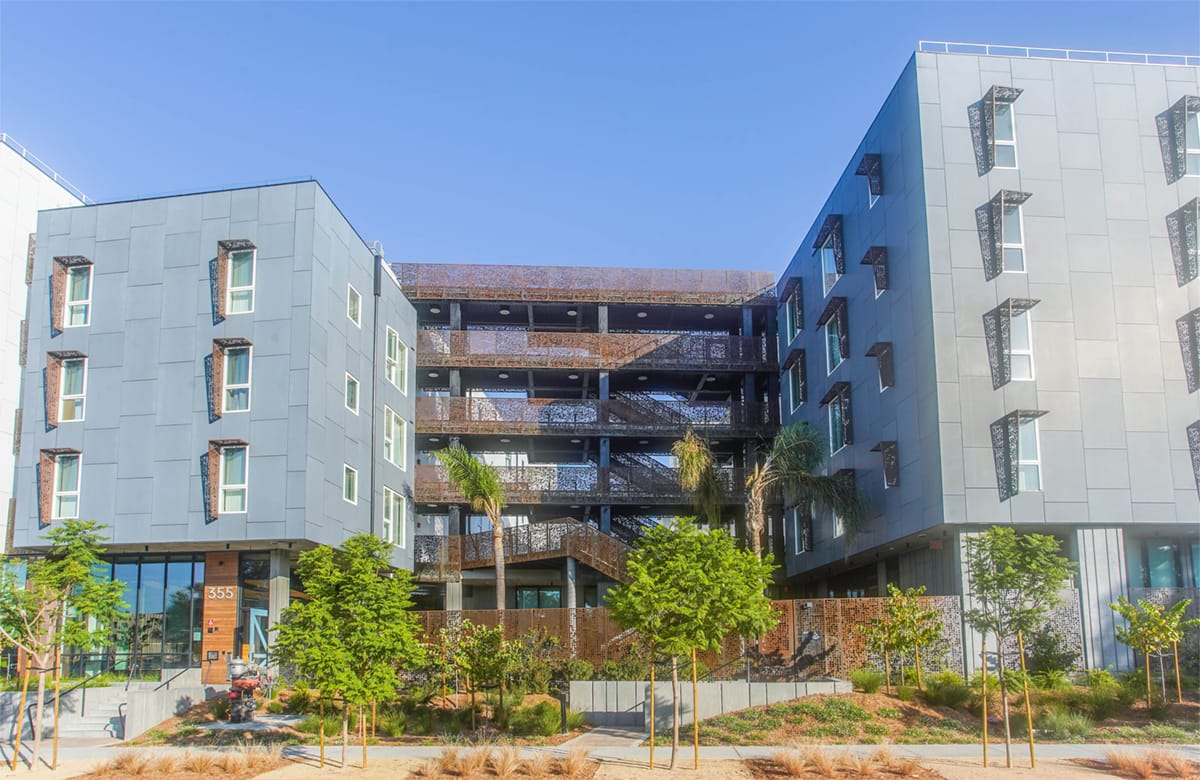
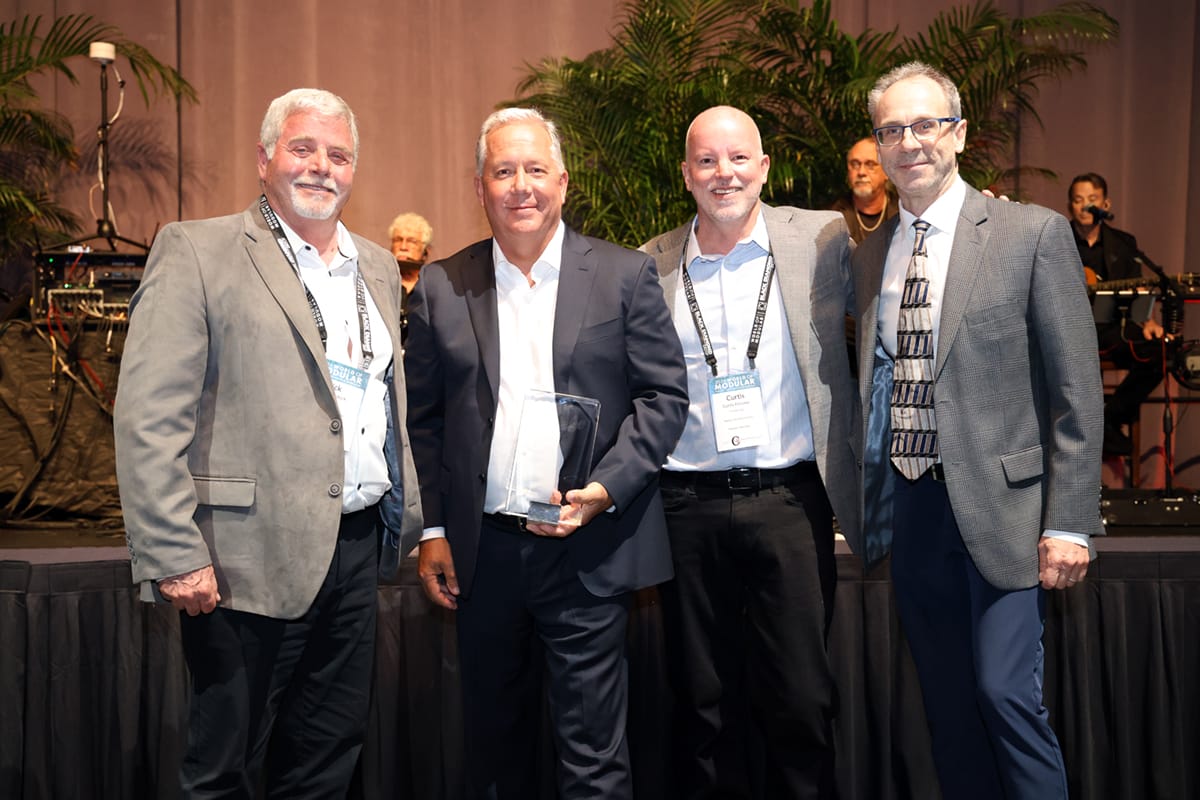
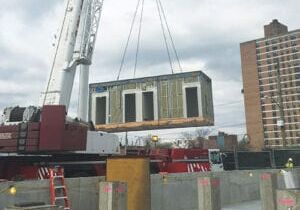
This year’s Awards of Distinction winner for Best of Show for Permanent Structures is 355 Sango Court, a 105,818 square foot affordable housing development manufactured by Nampa, Idaho based Autovol. The project team also included Prefab Logic for module design, Nibbi Brothers as the general contractor, Acc U Set Construction as the modular installer, and the overall project design was by David Baker Architects and DCI and Fard. The 102-unit development was constructed in Milpitas, California, and is comprised of 113 modules.
Rick Murdock, CEO and co-founder of Autovol, said it was one of the smoothest projects he’s experienced, which is surprising when you consider that this was the first modular project for the general contractor.
Nibbi Brothers approached Autovol after another manufacturer dropped out of the project. The two had an existing relationship, but no previous modular project experience. Murdock admits he was a bit nervous about taking on the project with a contractor who had no experience with modular construction. “All your alerts are out because there’s a lot of education that has to happen because it’s done differently.” But his nerves were unfounded.
“They worked with us all the way through the project. They were here at the plant really trying to understand how modular works, what are the issues with modular, what are the differences than with a traditionally built project. I was really pleased with the way they dove in and took ownership of their piece of it and did a tremendous job.” Nibbi even staffed a person at the factory to get a better understanding of Autovol’s quality assurance program.
Interestingly, Autovol also learned something from Nibbi Brothers during the project. Nibbi suggested a change in the material used to wrap the units and keep them dry while they are in transit and being installed. Murdock admits he was against it in the beginning because it was different than what they normally did and took more labor. But Nibbi was persistent, so they tried it, and now it has been implemented as the standard for all units going out of Autovol’s factory.
An important part of Autovol’s process is the design and programming for their automated assembly line. In 2016, Murdock and Autovol co-founder Curtis Fletcher started a company to provide those services to Autovol and other modular manufacturers called Prefab Logic. According to Murdock, “There’s a disconnect between developers, general contractors, and modular manufacturers because modular is not as common as we’d like it to be and it’s a different type of building. So, we started the company to help everyone understand how it works.”
A year and a half ago they added a mechanical, electrical, and plumbing engineering group to their team. With in-house engineering they are able to be more efficient with their design process. “That’s one of the things we’re really focused on, trying to make the process better, faster, and more accurate from an engineering and architectural standpoint, so we have fewer coordination issues, improved accuracy, and better documentation for our teams,” said Fletcher.
Prefab Logic’s role in this project was to make the design viable for Autovol’s automated manufacturing, get the project through permitting, and then convert the design to programming language for the robots on the manufacturing floor. Their in-house MEP engineering team played a key part in this process.
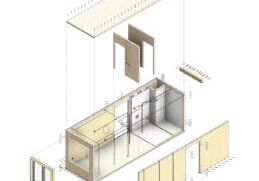
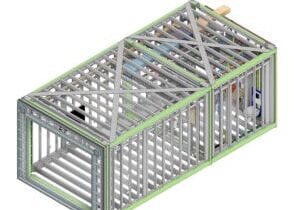
Fletcher’s team created a digital twin of the completed structure. “We use it for our customers to preview what we’re doing and see if there’s anything that they would like to change or any comments they have,” said Murdock. All facets of the building are modeled, right down to framing, structural components, MEP locations, and every hole, screw, and nail. The model is also used by the internal manufacturing team to spot issues that might come up on the line.
Once the project is completed, a Navisworks model is then passed on to the owner for use in operations and maintenance.
The project had a pretty aggressive timeline as it needed to fit into Autovol’s production schedule, so the team worked diligently to expedite the design and programming process, which was completed in only four and a half months. Autovol has one of the fastest production lines, so the project’s 102 units took just under two and a half months to manufacture, with the entire project taking 443 days to complete.
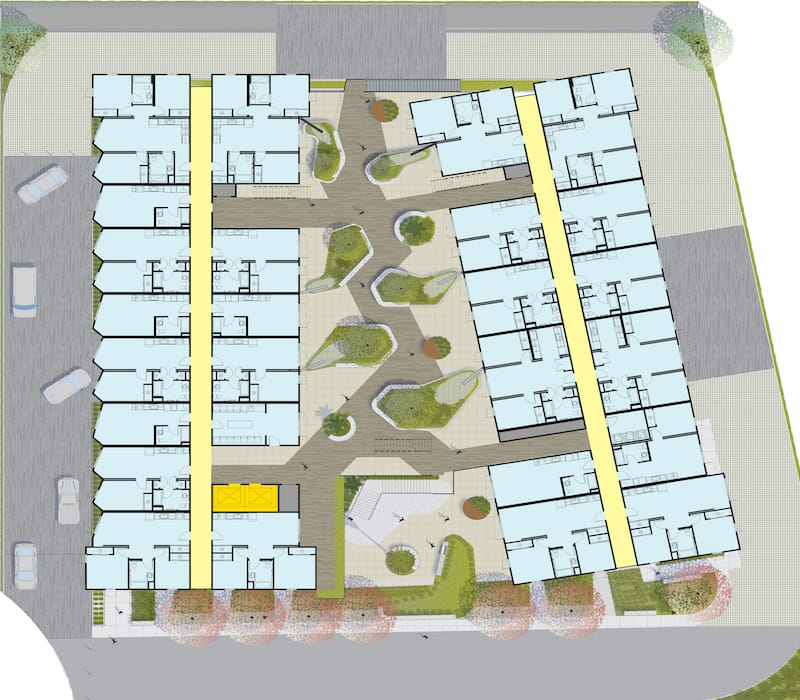
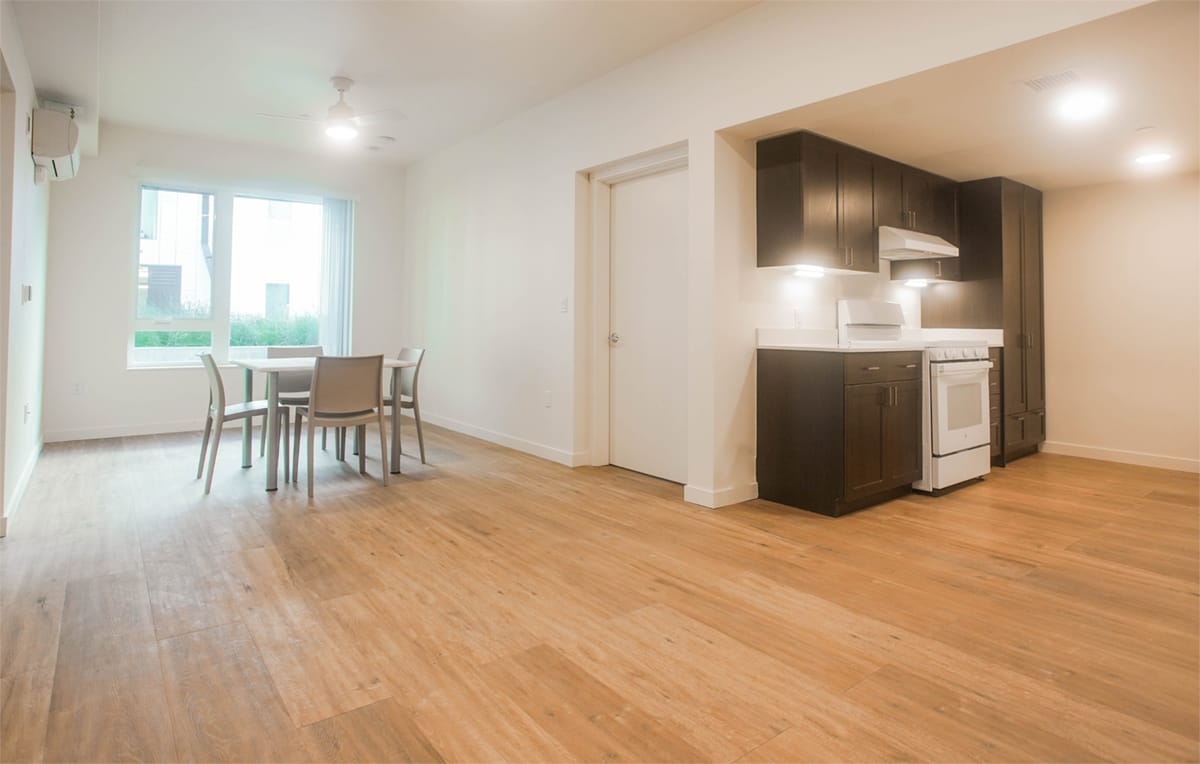
The four-story development consists of two concrete and steel buildings connected by a series of linked courtyards, providing access to nature for all residents. On the ground floor there’s a garden entry and open-air lobby, with 102 permanent supportive homes on the floors above. The units are a mix of studios, one-, two-, and three-bedroom apartments. An emphasis was placed on sustainability and energy efficiency, building to CalGreen standards, using WaterSense certified plumbing fixtures, and efficient windows. The facility is managed by Resources for Community Development, which provides rental homes for more than 5,450 people in 25 cities in the region, about one third of which are reserved for people with special needs.
There are significant cost savings for using modular construction on a project like this. Murdock said that developers in the Bay Area could save between $80 to $100 a square foot. And of course, the real benefit is the time savings, as a modular building can be manufactured and assembled significantly quicker than a traditional building.
Autovol boasts the world’s first fully automated volumetric modular factory. At 400,000 square feet the factory utilizes robots to do most of the heavy lifting and repetitive processes, including building the floors, walls, and ceilings, while skilled workers, called “solutioneers,” perform the interior finish work, fixture installation, and mechanical, electrical, and plumbing. Their production rate is an incredible five units a day, which translated into 629,772 square feet of living space in 2023.
Prefab Logic provides services to a variety of modular manufacturers and developers. They can help owners or contractors select a modular factory, work with design teams to design for modular construction, provide digital twin and BIM modeling, and walk projects through the permitting process.
About the Author: Dawn Killough is a freelance construction writer with over 25 years of experience working with construction companies, subcontractors and general contractors. Her published work can be found at dkilloughwriter.com.
More from Modular Advantage
MBI Town Halls 2026: Reflections from Boston
By the end of 2026 MBI’s Government Affairs team will have traveled over 6,000 air miles to bring Town Hall events to five different cities in two countries.
Mind the Gap: The Interface Between Onsite and Offsite Construction
Every design for manufacture and assembly (DfMA) project — modular, mass timber, or panelized — is really two projects joined at a seam. One is built in a controlled factory to millimeter tolerances; the other in the field, in weather, to the looser tolerances of poured concrete and human hands. Between them sits an interface: where the factory’s precision meets the site’s reality.
Rules, Rails & Repeatability: Applying DfMA to Modular Healthcare
DfMA offers several advantages for healthcare projects, with faster delivery among the most valuable. Schedule matters when building new facilities, expanding campuses, renovating existing space or bringing care closer to communities that need it.
Precision and Possibility: Demands of DfMA and What Modular Mass Timber Makes Possible
Mass timber does not automatically create an efficient modular building. Its precision makes early coordination more important: fabricated components will accurately reproduce both the team’s solutions and its mistakes. The material’s advantages are realized only when supported by an equally precise design and delivery process.
Catch It in the Factory, Not in the Field: Smarter Testing for Modular Builds
Integrating watertightness and airtightness testing into factory workflows transforms quality assurance from a reactive process into a proactive commissioning strategy. It ensures that every module shipped is field ready and resilient for transportation while also supporting the ability of the modular construction industry to make buildings better.
Modular Construction Contracts: Key Considerations for Successful Canadian Projects
Starting a modular project with a well-developed contract protects both the owner and the contractor. It will help keep the project on track and on budget, and it will improve quality from the factory floor to final installation on-site.
Modular by Design: Turning Architecture into a Manufacturing System
Modular construction is often presented as a faster way to build. Speed, however, is only one part of its value. The larger opportunity is to create a coordinated design and production system that improves quality, reduces uncertainty, and allows a building to move efficiently from concept design through manufacturing, transportation, installation, and completion.
Repeatability Begins with Trust: What Alora at Dry Creek Reveals About Scaling Modular Housing
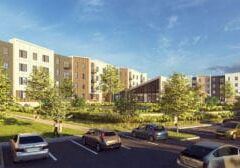
Alora at Dry Creek, a 329-unit, multifamily community comprising five four-story buildings in Centennial, Colorado, demonstrates how repeatable design, standardized manufacturing and early collaboration can work together to create a model that is not only faster to deliver, but easier to replicate across future projects.

T.R. Arnold: The Art of Third-Party Inspections
T.R. Arnold (TRA), a third-party inspection company in Elkhart, Indiana, contracts with modular manufacturers across the US. Manufacturers register with each state to which they intend to send their modules and may be required to hire a third-party inspection company.
Creating an ‘Ecosystem for Innovation:’ 50+ Years of Modular Construction Oversight in Virginia
Virginia’s modular building program began in 1973, with the implementation of the Virginia Industrialized Building Unit and Mobile Home Safety Regulations. Now it’s leading the country in modular code adoption.