
MBI Town Halls in 2026: Reflections from Boston
As we head into the final stretch of 2026, there is just one stop left on the MBI Government Affairs Town Hall Road Show.
By the end of the year, the GA team will have traveled over 6,000 air miles to bring MBI into five different cities in two countries, reaching well over 100 members and non-members alike.
Before we hit the road one last time in Indianapolis on October 29th, I wanted to reflect on the most recent town hall we held in Andover, MA at the Reframe Systems facility.
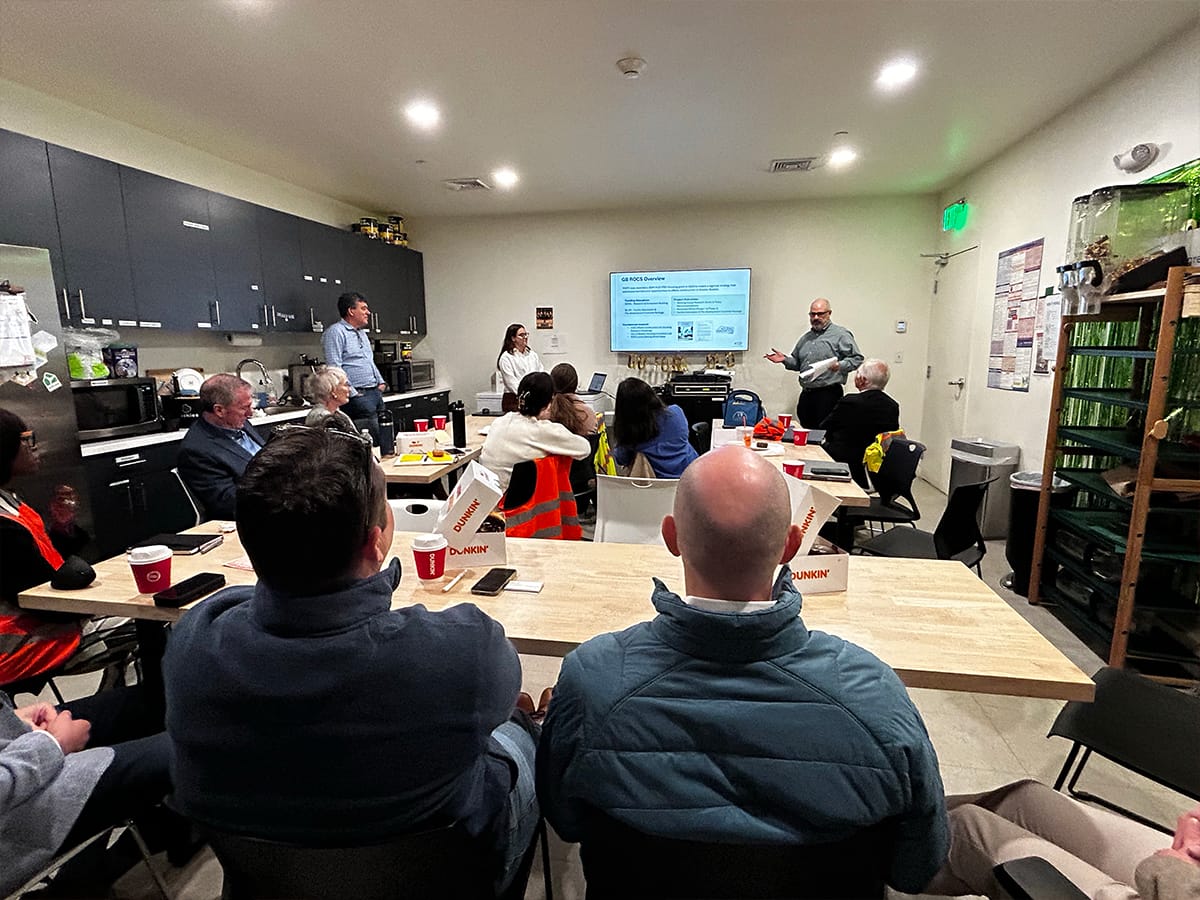
MBI member company Reframe Systems hosted the Boston Town in its break room for nearly four hours.
An Engaged Gathering of Industry Stakeholders
We have done events in hotel ballrooms and university lecture halls, but being in an MBI member factory is probably the best space we could ask for. Reframe graciously gave us full use of their break room for nearly four hours.
It probably helped that we brought enough coffee and donuts from Dunkin’ to require a visit to two separate Dunkin stores. Thankfully, it was Massachusetts, so they were across the street from each other.
While this was one of the smaller spaces we’ve been in, it was also the most intimate. Sitting shoulder to shoulder with other attendees, and so close to the day’s presenters, made it possible to have productive and engaging discussions.
Prevailing wage was a persistent theme throughout the morning; In the MBI Government Affairs update, I brought attendees up to speed on our lawsuit against Oregon related to their new offsite prevailing wage law. The Metropolitan Area Planning Commission (MAPC) noted that they were seriously examining in their research the impacts prevailing wage can have on overall project costs as well as potential benefits for workers. Bob Ross of the Greenberg Traurig law firm provided legal insights from a prevailing wage case involving a modular company that he has been working on for over a year. While we didn’t break new ground, I think everyone came away with a better understanding of how prevailing wage impacts the modular industry.
We also covered several federal bills that, while they are all likely to die in the current (119th) Congress, we expect they will be reintroduced in the 120th after the new year. These bills touched on several industry priorities, including promoting the adoption of the ICC-MBI 1200 series standards, examining the impacts of “Build America, Buy America” policies, and spurring modular construction in federal affordable housing development.
In addition to diverse topics for discussion, we had a strong showing from different segments of the modular industry, including both manufacturers and suppliers.
We were proud to have hosted MBI members from the Massachusetts area, as well as surrounding states, and even international guests from Canada. Aside from MAPC, in the crowd we were excited to have representatives from another government entity, the Massachusetts Housing Finance Agency.
If not for Reframe needing to turn its breakroom over to its hardworking employees for their lunch, I’m positive we had a few more hours of discussion and networking in us.
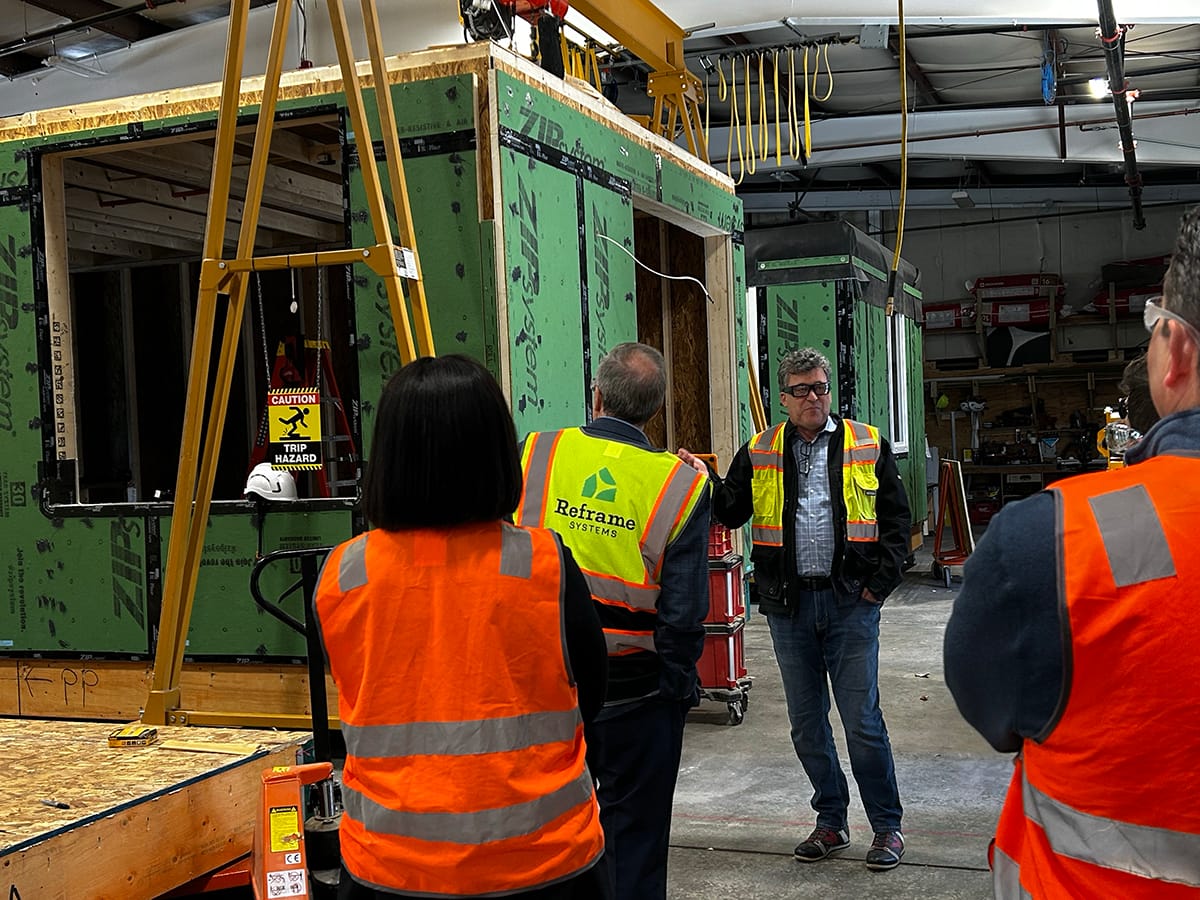
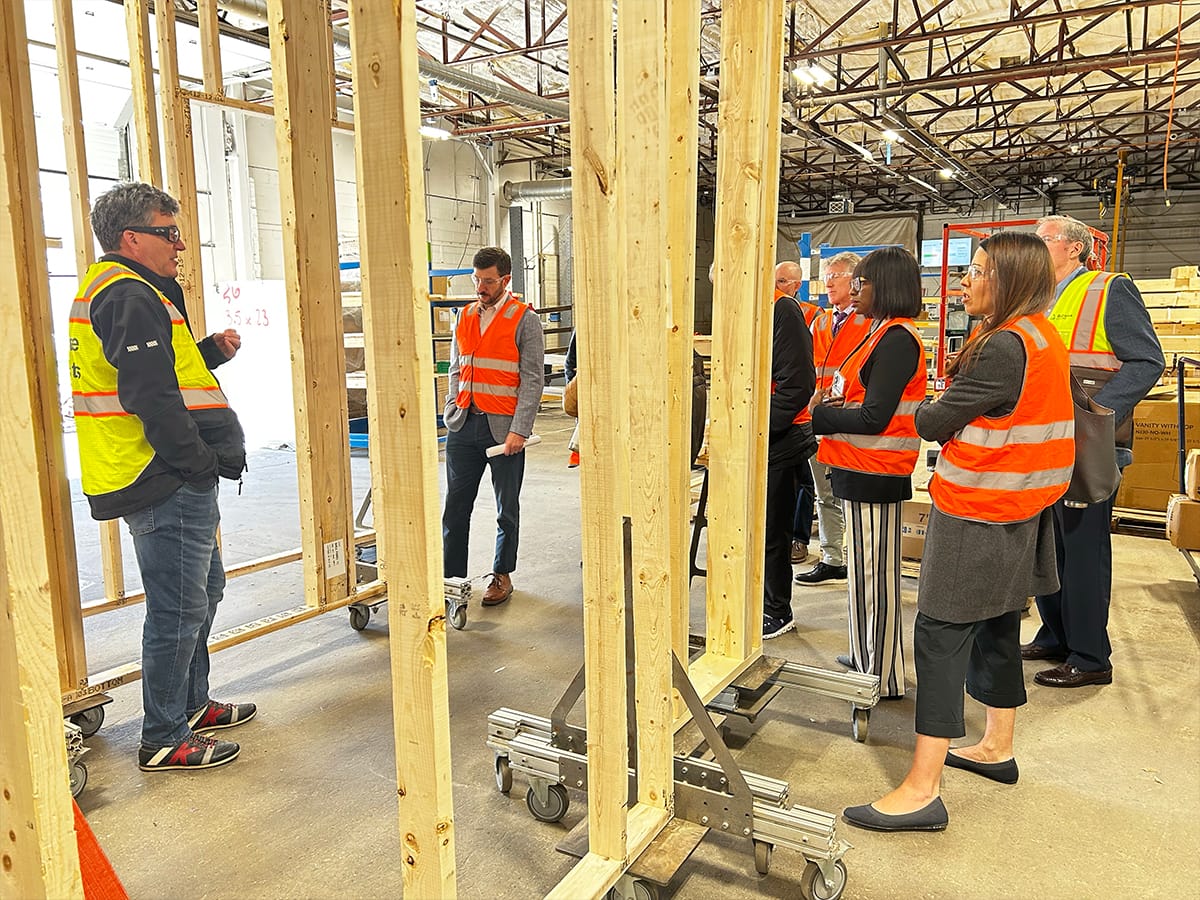
A guided tour of Reframe's factory followed the town hall, allowing attendees to learn more about the company's modular construction processes.
A Guided Tour of Reframe Systems
To finish out the event, our hosts at Reframe gave us a tour of their facility, which was especially generous given that during our visit, they were in the middle of moving to a new, larger factory.
While they have moved much of their advanced robotic equipment to the new factory, there was still a CNC machine humming along in the background as Reframe’s Head of Product & Revenue, Justin Hersh, explained how the company integrates machine learning into their human-driven systems.
Being up close and personal with the manufacturing process always sparks great conversation. Members were interested in why Reframe used certain building materials and there was a fascinating discussion of the challenges presented by different weather-related building code provisions in various regions of the country.
Other topics we covered on the factory floor included how policy typically lags innovation, leading to mismatched expectations from regulators and market participants, and the need to engage policymakers directly, including by getting them into factories to see firsthand how potential legislation will impact our industry.
There’s a lot to be gained from in-person connection. That’s why we’ve been zigzagging across the continent; to bring your trade association to you. If you want to host a town hall like this one, please don’t hesitate to reach out to the Government Affairs team.
Thanks again to Reframe Systems for hosting us! We are looking forward to our last event in Indianapolis on October 29th, and we hope to see you all out there.
About the Author: Andrew Muchnick is the government affairs manager for the Modular Building Institute. You can reach him directly at andrew@modular.org.
Additional Government Affairs Articles
MBI Secures NY Governor Veto On Bill Targeting Modular Industry
A large fleet owner member of MBI was recently delayed in Georgia due to the state’s confusion over the details of the International Building Code. According to the company’s regional general manager, “The feedback we got was, ‘Your plans are not up to date, you need to bring them up to code.’”
Here’s how MBI was able to correct the state’s misunderstanding.
Read Complete Article
What is the Davis-Bacon Act and How Does it Affect Modular Construction?
Adopted in 1941, the Davis-Bacon Act was written long before the modular construction industry gained momentum. Now, the US Dept. of Labor is considering applying the law in ways that will seriously curtail the use of modular construction for federal and state projects.
Read Complete Article
MBI Solves Relocatable Building Code Issues in Atlanta
A large fleet owner member of MBI was recently delayed in Georgia due to the state’s confusion over the details of the International Building Code. According to the company’s regional general manager, “The feedback we got was, ‘Your plans are not up to date, you need to bring them up to code.’”
Here’s how MBI was able to correct the state’s misunderstanding.
Read Complete Article
MBI Helps Kick-Start Stalled Plan Review Process
Modular projects in Washington State had ground to a halt. Plan review lead times began stretching into six, eight, even twelve weeks. “Over the summer of 2021, it was getting even longer than that,” says Alan Rasmussen of Modern Building Systems. “By the fall and winter of 2021, reviews were taking 24 weeks.”
Here’s how MBI was able to get things moving again.
Read Complete Article- « Previous
- 1
- 2
- 3
- 4
- Next »